Scott 3200A Tailwheel – Fully Rebuilt: Precision Steering for Taildragger Aircraft
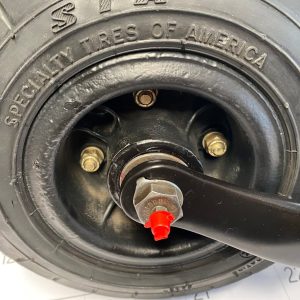
The Scott 3200A Tailwheel – Fully Rebuilt provides aircraft owners, pilots, maintenance facilities, and restoration specialists with a renewed tailwheel solution developed for compatible conventional-gear aircraft. A fully rebuilt description should identify which bearings, bushings, springs, steering components, seals, fasteners, wheel parts, and wear items were replaced or Aviation Tailwheel System retained.
The Scott 3200A Tailwheel Assembly should be matched with the aircraft tail spring, mounting arrangement, steering linkage, operational weight, and approved configuration. The Scott Tailwheel Assembly may contain bearings, bushings, springs, steering pawls, arms, wheel components, axle hardware, fasteners, and internal wear surfaces.
The Aircraft Tailwheel Assembly carries tail loads while allowing the aircraft to taxi, turn, park, take off, and land on suitable surfaces. The General Aviation Tailwheel should be selected according to aircraft weight, tail load, wheel size, spring arrangement, steering configuration, runway environment, and installation requirements.
Whether operators are sourcing a Heavy-Duty Aircraft Tailwheel, Tailwheel Aircraft Parts, or Aircraft Steering Tailwheel, condition and documentation should remain central.
Key Benefits of a Rebuilt Scott 3200A
The Scott 3200A is designed to provide tail support, wheel rotation, steering response, and controlled swiveling for compatible conventional-gear aircraft. A system-level evaluation can identify the true cause of binding, looseness, poor centering, irregular tire wear, or inconsistent ground control.
Scott 3200A Tailwheel Applications
Suitable internal clearances and secure steering components contribute to consistent performance. The quality of the finished assembly depends on component condition, correct reassembly, suitable parts, and final functional evaluation.
Scott Tailwheel Reliability and Condition
A thorough rebuild generally begins with complete disassembly, careful cleaning, detailed inspection, and measurement of wear-sensitive areas. Transparent rebuild information supports stronger commercial credibility and buyer confidence.
Aircraft Tailwheel Assembly Benefits
The assembly carries tail weight while managing runway irregularities, side loads, repeated landing cycles, and directional forces. The entire installation should be reviewed whenever a rebuilt tailwheel is fitted.
Choosing a General Aviation Tailwheel
Grass, gravel, and dirt can introduce moisture, abrasive particles, vegetation, and debris into moving areas. Professional verification helps prevent unsuitable installation and unnecessary project expense.
Maintaining an Aircraft Tailwheel
The tailwheel contributes to directional control as the aircraft transitions between stationary, taxi, acceleration, deceleration, and landing rollout. The wheel should rotate smoothly without excessive side play, roughness, binding, or abnormal drag.
Maintaining a Taildragger Tailwheel
A responsive and correctly adjusted tailwheel can contribute to predictable taxiing and controlled turning. Pilots should avoid unnecessary mechanical stress while using operating techniques appropriate to the aircraft and surface.
Aviation Tailwheel System Inspection
Every component influences how steering input reaches the wheel and how operational loads return to the aircraft. Left and right steering connections should be inspected for matching condition and correct installation.
Maintaining a Tailwheel Steering Assembly
A professional rebuild should address the complete Tailwheel Steering Assembly rather than only visible exterior parts. Hardware should remain secure, correctly sized, and appropriate for the assembly.
Maintaining Aircraft Ground Handling Components
Reliable ground handling begins with a serviceable assembly and a correctly adjusted installation. Responsible ground movement protects the Aircraft Ground Handling Tailwheel and surrounding structure.
Benefits of the Scott 3200 Series Tailwheel
Historical popularity does not remove the need for exact aircraft compatibility and installation verification. Accurate information reduces ordering mistakes and improves buyer confidence.
Maintaining a Heavy-Duty Aircraft Tailwheel
Rugged operations may involve gravel, grass, dirt, uneven surfaces, frequent cycles, contamination, and repeated loading. Mud, dust, gravel, and water can shorten inspection and lubrication intervals.
Maintaining Tailwheel Components
Visually similar hardware can differ in dimensions, material, strength, finish, or mechanical fit. The rebuild should examine all interacting parts rather than focusing on external appearance.
Aircraft Steering Tailwheel Performance
The assembly should respond without excessive delay, harsh engagement, binding, or uncontrolled movement. Uneven tire wear may indicate alignment, bearing, or steering concerns.
Installing a Replacement Aircraft Tailwheel
Aircraft records may reveal previous modifications or approved changes that influence replacement selection. The unit should not be installed solely because it appears clean or freshly refinished.
Maintaining General Aviation Gear Components
The tailwheel should be considered within the broader condition and alignment of the aircraft landing gear. Sellers should avoid unsupported claims of universal compatibility, guaranteed serviceability, or immediate installation readiness.
Inspecting a Fully Rebuilt Scott 3200A
A pre-purchase inspection should confirm the assembly identity, rebuild scope, structural condition, included components, tire status, steering arrangement, and available documentation.
- Confirm that the assembly is a Scott 3200A, review all visible markings, compare mounting details, and verify the wheel-and-fork configuration for the intended aircraft.
- Inspect the assembly for cracks, corrosion, bending, damaged threads, enlarged holes, fork distortion, tire wear, rough rotation, and excessive looseness.
- Report missing parts, shipping damage, rough operation, identification discrepancies, or incomplete documentation according to the agreed terms.
Installing the Scott 3200A Tailwheel
Mounting surfaces, steering springs, chains, hardware, and attachments should be reviewed before the rebuilt unit is installed. The tailwheel should move through its intended range without binding, abnormal looseness, interference, or contact with surrounding components.
A post-installation inspection can confirm hardware security and reveal early movement marks.
Protecting a Rebuilt Tailwheel Assembly
Preventive maintenance can identify wear before it develops into shimmy, binding, looseness, poor steering, or component damage. Early attention supports reliable long-term operation.
Responsible care supports dependable Scott Tailwheel Assembly performance.
Selecting a Scott 3200A Tailwheel Assembly
The Scott 3200A Tailwheel – Fully Rebuilt may suit aircraft owners, bush operators, restoration facilities, flight schools, maintenance organizations, and pilots seeking renewed ground-handling performance. A qualified aircraft maintenance professional should evaluate the complete installation before the tailwheel is returned to operational service.
Whether the requirement is a Scott 3200A Tailwheel Assembly, Scott Tailwheel Assembly, Aircraft Tailwheel Assembly, or General Aviation Tailwheel, exact installation details should guide the purchase. With verified compatibility, correct installation, professional steering adjustment, suitable lubrication, and routine inspection, the assembly can provide dependable long-term value.